

Time flies; this is a constant found in every culture. Over time, the state of things and situations change. Chemistry, for example, tells us that nothing is in permanent equilibrium; there are only chemical reactions that happen more or less quickly. The air I am breathing right now is full of billions of molecules of oxygen, nitrogen, and carbon dioxide coming from who knows where, as well as countless spores and viruses that my immune system is (hopefully) defending me from.
Time can also be understood as cyclical. The Earth rotates around the Sun with relative regularity, just as it does around its own axis. I say “relatively regular” because, in reality, no single orbit is identical to the last—it is a chaotic system. We effectively live within imperfect cycles that seem identical but are not. The current cycle brings us face-to-face with the Christmas holidays and, with them, the uncomfortable questions from relatives.
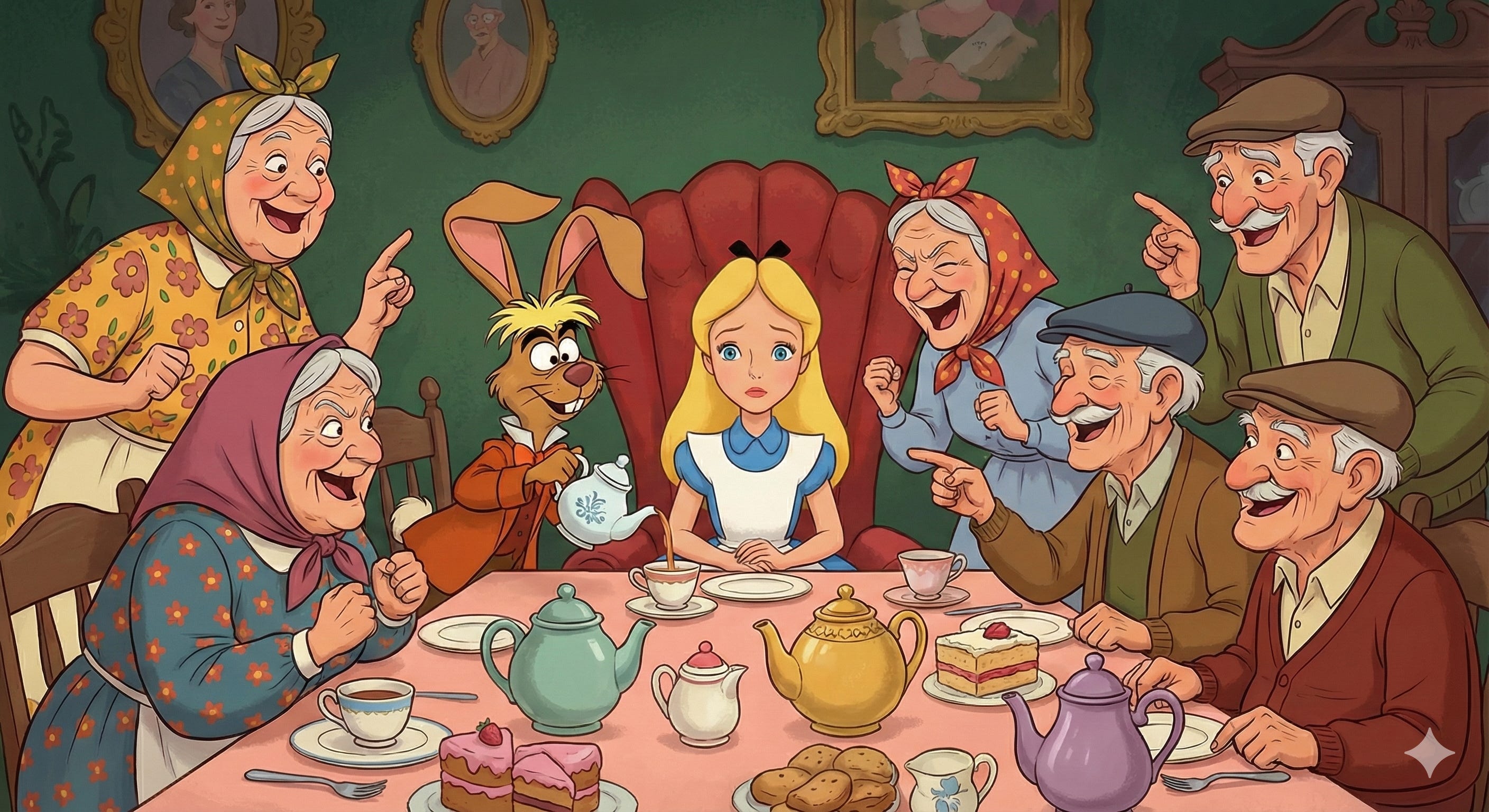
Personally, I love Christmas, and I wouldn’t give up the questions from those you (unfortunately) see only a few times a year for anything. Perhaps I am the annoying relative who asks them; I don’t know if I became this way with age, or if I’ve always been like this. In any case, in a few days, most of you reading this post will face these questions, myself included. They can stem from various origins: certainly affection and curiosity, but also a pinch of envy that we don’t want to admit to ourselves.
Suppose you are facing a “viper” relative and that behind their question lies a presumed certainty (and a bit of arrogance). For example, the viper relative asks how university is going because they already have a degree, and thus feel superior; or, the viper relative asks how much rent you pay because they own a house, and perhaps another one for their children. One can respond to these questions in various ways, and you might feel backed into a corner. However, there are two little words we can add to a sentence to dismantle their “castles” and certainties: “for now.” A preposition and an adverb can work miracles. Let me show you how.
Let’s take an even harsher example, bordering on the absurd: Viper Relative: “How do you like it in Milan? I hear life is terrible there.”
Maybe you actually like living in Milan. Maybe you come from a smaller town and find life there stifling, while you feel at ease in the frenzy of the city. Perhaps the viper relative’s lifestyle just isn’t for you. At the same time, you do pay a lot in rent, and the second part of their sentence weighs on you. A typical response might be:
“I like it, but I pay a lot in rent.”
The viper relative lets out a smirk. They look at you with a mix of pity, authority, and paternalism. They’ve won. They are the ones enjoying a generous pension they’ve had for 30 years (despite only working for five) and staying in your hometown where you didn’t feel at home. That “but” in the sentence is a total defeat; it cancels out the “I like it” and highlights the “I pay a lot in rent.”
How do we avoid letting the viper relative win? If you say: “I like it and I pay a lot in rent,” the relative will smirk again. Instead, try:
“I like it, but I pay a lot in rent for now.”
The difference is astronomical. The key point is that we are used to speaking in eternal sentences, describing conditions as if they were detached from time. Time can become our friend if referred to the things that aren’t going well. Saying “I like it, but I pay a lot in rent for now” works much better because it brings time to our side. Who says we will stay in that situation forever? The future holds infinite possibilities; it is a blank canvas waiting to be painted.
This example alone is worth sharing this article with a friend by clicking on the blue button, but I want to share something more with you.
The phrase “for now” allows us to give a temporal dimension to our sentences and reclaim the power of possibility. Conversely, it can also diminish a positive state. If someone asks: “How are you?” “I recently moved house and I’m doing very well.”
That is different from: “How are you?” “I recently moved house and I’m doing very well for now.”
In the second case, it implies that the well-being might turn into a bad situation. Adding “for now” at the end completely changes the tone of what we want to express. It is a magic formula in both directions; it can defend us or undermine us.
Certain disciplines, like Neuro-Linguistic Programming (NLP), teach how to formulate sentences in specific ways to restructure our thinking. I recently read a book on the subject and found it useful for broadening my perspective; however, if used poorly, NLP can turn into a scripted performance that doesn’t reflect who we truly are.
For example, suppose you have an objectively grueling job. If a trusted friend asks, “How’s work?” and you lie by saying, “Work is going well,” just because you think repeating it might make you feel better—well, that is usually just lying to yourself, and I strongly advise against it.
Language can have therapeutic power. “For now” has helped me a lot, and I wanted to share this little trick here, now that Christmas and the New Year are approaching—and with them, a reflection on the passing of time. I wrote about my thoughts on the present and on age here last February (Reach a high goal or die trying, or, the meaning of days at 27); my thinking hasn't changed. I was rewatching the videos I posted on YouTube in the past while I was in Covid quarantine; the one titled 'FIT for a NORMAL LIFE and without DELAYS' (only in Italian, I’m sorry) remains one of my favorites. I believe it hasn't aged at all.
So, Merry Christmas! Do not be afraid of the viper relatives; in fact, enjoy your time with them. Because while time certainly changes things and our “true” age is what we feel inside rather than what’s on our ID, one certainty remains: lost time never returns.