

When my mind wants to punish me, it reminds me that I am 27. It brings up examples of illustrious people who, at 27, already had a Nobel Prize and 30 billion dollars in their bank account; in that light, I am “already” 27. If my mind wants to be a bit kinder, it tells me that Bezos and many others became “great” much later, capitalizing on experience gained earlier; therefore, I am “still” 27.
This age places you at a crossroads. Until you’re 18, you’re in school and the burden of the future doesn’t weigh on you, other than choosing whether to continue with university (and if so, which faculty) or to start working. In reality, that choice isn’t entirely free; it is bound by your family context. If you attended a liceo (Italian academic high school), the question asked is: “Law, Engineering, or which other degree?” because jumping straight into work isn’t even contemplated. It doesn’t always happen that explicitly, but it’s there. At the same time, relatives are somewhat right—not so much for the presumed prestige of a degree (Sic transit gloria mundi), but because it is easier to make a living with a qualified profession rather than possessing only general knowledge. In any case, the choice is heavily guided. Perhaps it isn’t truly free.
During university, your only occupation is to graduate. “And then?” That is the question relatives ask at Christmas. But when you finish university, there are no more excuses: you must choose what to do. It isn’t society deciding for you; it’s you. There are no longer relatives pointing to one path or another (though they might still try). It’s just you and your responsibilities.
Here we return to being still 27 (because maybe you want to explore) or already 27 (because it’s time to sacrifice your dreams). Sometimes you feel proud of your choices; sometimes you feel backed into a corner. Either way, those are your shoulders alone, with no protection.
I am the first to argue that one must have faith—that you must keep going because the dots will connect in the future, not the past. But when it’s your own skin on the line, things get complicated. At that point, it becomes easy to “give in” to comfortable jobs and comfortable situations: to seal the drawer of your dreams forever and have a “normal” life—a 9-to-6 job, a mortgage, a car paid in installments, booking a trip to Iceland, and bragging about not living in Milan because of the rent.
Or, no. You keep fighting for your dreams. You stop caring about others and what society “asks” of you. You sign up for a course in a rare language just because. You get a tattoo just because. They call it the “quarter-life crisis,” and perhaps it’s real.
The price of following your dreams is the detractors—those who, in the face of our failure, will say: “See what happens when you’re still acting like a kid at 30 (a cugghiuniari a 30 anni, in Sicilian dialect)?” But as long as the price is just the unsolicited opinions of those who have already given up on their own dreams, perhaps it’s a risk worth taking.
Recently, I’ve been reading Antifragile by Taleb (author of The Black Swan). It is surprising how many things in human history were born by chance and, above all, how it makes no sense to make predictions. Life is governed by phenomena so rare they are considered impossible (placed beyond the “6σ” of the Gaussian curve, for those who know their math).
Let me give you a recent example. In December 2024, “ChatGPT Ultra Premium Maxi Super” was proudly launched at $200 a month (more expensive than Milan rents), and the tech world deemed it absolutely essential—a justified expense to stay competitive, a panacea for productivity. Then, peek-a-boo: on January 27 2025, “DeepSeek” popped up—a Chinese AI that is equally high-performing and, above all, incredibly cheap and free to be used, replicated, and modified. Crack. Free beats luxury. Always. We all complain about Ikea, but if the alternative costs 200 times as much, long live Ikea. Sic transit gloria mundi. Nvidia loses 20% of its value in a single day. Who could have predicted DeepSeek? No one. Other equally high-performing, low-cost AIs are emerging now.
Back to the main point: being 27. Personally, the only thing that gets me out of bed in the morning is grand dreams. It’s not worth spending oneself on small things. I’ve believed this since I was a kid; in high school, I had a poster in my room that said “DREAM BIG.”
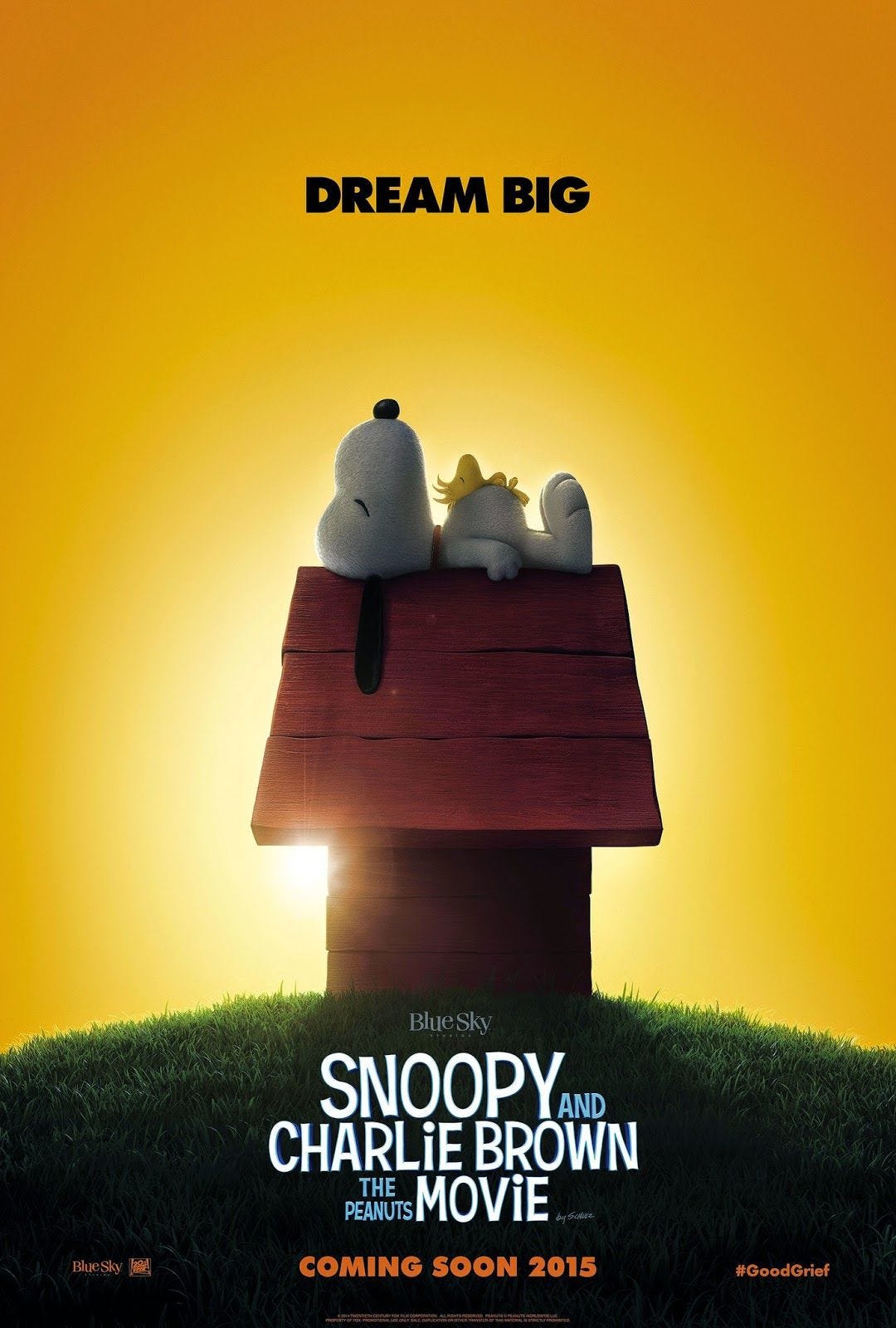
I will make mistakes, I will fall, I will waste time. I will follow a winding path that might lead nowhere. And then? And then you will judge me and punish me. “See what happens when you’re still acting like a kid at 30?”
In reality, I believe freedom is priceless. Many might agree with me, but I fear few truly understand what freedom is. Real freedom—not the constrained freedom of choosing between A and B. The freedom to NOT choose, or to choose C. To postpone the choice just because.
Those who have abandoned their dreams evoke a certain tenderness in me. I am also convinced that the more frustrated a person is, the more they desire to clip the wings of others. That is my conviction, not proven by facts, but it remains mine—pure.
To spend oneself on something that isn’t ambitious is, for me, not worth it. It’s all or nothing. In the coming months, I will often return to the concept of “6σ” (Six Sigma)—to what lies beyond the light, beyond the ordinary, beyond the predictable and the predicted.
So, I am still 27 and I am already 27. If destiny allows, in a few years I will be still 43 and already 43. Then still 57 and already 57. Finally, I will be still 90 and already 90. Others, instead, will find themselves finally 90, or finally 27.
We should always have grand dream
to fight boredom and neurosis
and if you still don’t believe it,
do as you wish
I throw myself toward the sky,
open my arms and then...
...You see, you can fly.
(Bandabardò, “Sogni Grandiosi”, the original song is in Italian)